
Evolution of Mind(s)
Evolutionary theorists reflecting on the evolution of mind


George C. Williams (1926-2010)
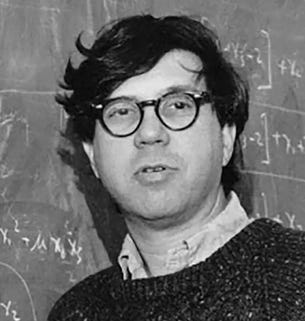
Richard Lewontin (1929-2021)
Evolutionary biologist Richard Lewontin (1998) argued that there are questions about the evolution of cognition we can never answer. In doing so he staked out one among the various skeptical positions about the evolution of mind. He argued from the position of an evolutionary biologist assessing how applicable tools from his field were to answering these questions. He was also responding to brands of hyper-optimistic evolutionary approaches to mind such as evolutionary psychology, which at the time was peaking and rapidly gaining adherents in psychology and philosophy of mind.
Plenty of evolutionary theorists have reservations about attempts to provide an evolutionary account of human minds. I think of such folks as pessimists, rather than full skeptics. Also, the pessimism here is local, evolutionary theorists harbor no doubts about the explanatory success of evolutionary biology in general and its explanatory prospects. Pessimists neither articulate Wallace style worries nor Fodor/Nagel style skepticism about the evolution of mind. There are also extreme optimists about evolution of mind, unabashed boosters. Here I’ll briefly take a look at Clark Barrett (2015), who very clearly articulates this position. I’ll then turn to the pessimism of George C. Williams and Richard Lewontin.
Barrett says “There are few things more obvious than the fact that we are products of evolution” (2015, 1). He says that all scientists agree with this statement. However, he claims that among social scientists “there are few things a scientist can do to generate more controversy than to make a claim that [a given] feature of human thought or behavior is the product of evolution” (2015, 1). His evidence for the latter claim is the “barrage of criticism that is directed at the field of evolutionary psychology” (2015, 1). (I’ll discuss evolutionary psychology in a later post in this series.)
Barrett defends the view that evolution produces many special purpose mechanisms that fit with specific aspects of the world (2015; See also Confer et al. 2010). This connects to evolution as follows: “There are many ways in which the mind is “fitted,” or shaped, to the world in which it operates, and all aspects of mind-world fit must, ultimately, be the result of the evolutionary process” (Barrett 2015, 15). Barrett’s optimism is captured by his use of “must.” How could things be otherwise?
Our pessimists are not social scientists but rather evolutionary biologists, who do not share Barrett’s enthusiasm. Williams observes that the human mind has been responsible for numerous benefits for as long as we have “had a culturally based society” (1966, 14). However, he “cannot readily accept the idea that advanced mental capabilities have ever been directly favored by selection” (1966, 14). Here there are echoes of Wallace but Williams does not reject all evolutionary accounts of the human mind, instead he proposes that “advanced mental qualities might possibly be produced as an incidental effect of selection for the ability to understand and remember simple verbal instructions early in life” (1966, 15). His reasoning here is that he can see no clear selection pressure for “geniuses” but he can see the repercussions for survival of not understanding simple warnings about rushing rivers or fires. Williams’ (1966) book is an examination of the scope and limits of explanations that appeal to natural selection and he sees serious problems for a straightforward application of natural selection to human minds.
Lewontin is more pessimistic than Williams but they share a key idea. Here’s Lewontin’s version: “it is incumbent on theorists of cognitive evolution by natural selection to provide evidence that there is heritable variation in cognitive capacities among individual [humans], and that those with greater capacities leave more offspring” (1998, 110). Lewontin contemplates the example of linguistic ability: “the evolutionary theorist must convince us that there was heritable variation for, say linguistic ability, in our remote ancestors […] and that those who possessed this ability, in the remote past, left more offspring by virtue of that ability” (1998, 111). Lewontin is not only pessimistic about straightforward natural selection accounts of human cognition but also argues that “incidental effect” of selection accounts,[1] like Williams’, are undercut by his reasoning. If linguistic competence arose as a bi-product of a large brain, for example, we now require an account that demonstrates that having a larger brain conferred a selective advantage. Barrett, thinks it is obvious that both linguistic competence and having large brains are the result of “the evolutionary process” but Lewontin has strict evidentiary requirements for such claims: “Evidence of the evolution of linguistic ability is not easy to come by” (1998, 111). It is this lack of evidence to support evolutionary accounts about human mental capacities that leads to Lewontin’s pessimism. He believes that the lack of evidence leads to evolutionary accounts of human cognition that “are nothing more than a mixture of pure speculation and inventive stories” (1998, 111).
Lewontin does not think that this charge applies to all evolutionary thought. Unlike Fodor, Lewontin believes that there are abundant sources of evidence for evolutionary explanations of all manner of biological traits. Evidence supporting evolutionary explanations comes from experimentation, comparative biology, phylogenetics, paleontology, molecular biology and so on. We cannot (and should never) perform artificial selection experiments or breeding experiments on humans, so evidence cannot be sought in this way. Comparative biology is something we can appeal to but Lewontin argues that this difficult to apply to human cognition and cognitive capacities. Our nearest evolutionary relatives are chimpanzees and other higher primates and we are quite distant from our common ancestor with them. (Such distances are measured in temporal terms and around 7 million years separate us from our common ancestor with chimpanzees.) Further, Lewontin argues that there is no paleontological record of human cognitive capacities or, at least, nothing near as substantive a paleontological record as there is for ancestral human femur length or cranial structure.
I think that there is a great deal of evolutionary thinking about human minds that raises above “pure speculation and inventive stories.” I also think that Lewontin’s pessimism can act as a useful guard against under-supported evolutionary claims about human cognition, consciousness and so on. I’ll talk about some evolutionary thinking about human minds in future posts but in my next posts, I’ll briefly introduce some key aspects of evolutionary thinking in general.
[1] Incidental effects are also called bi-products of natural selection. See Elisabeth Lloyd (2005) for a detailed defense of a the idea that female orgasm is an evolutionary bi-product.
(Williams and Lewontin’s writing was highly influential in my own thinking about evolutionary biology. I also had the privilege of spending time discussing evolutionary theory (and many other matters) with Lewontin on a number of occasions over the years.)