
Evolution of Mind
Darwin vs Wallace

In this and several other posts, I’ll be publishing material originally put together for a short book on the evolution of mind. A number of factors, including my retirement, lead to my abandoning the book project. Keith Frankish was the series editor for the book and I am extremely grateful for all of Keith’s efforts in moving the project along while it was viable. Cheers Keith and thanks!
In these posts I’ll talk about basic evolutionary theory that underlies most work on the evolution of mind, social science work on the evolution of mind and arguments between pessimists and optimists over the evolution of mind. Today’s post deals with the disagreement between Darwin (an optimist) and Wallace (a pessimist) over the application of evolution to human traits, including our mental capacities.
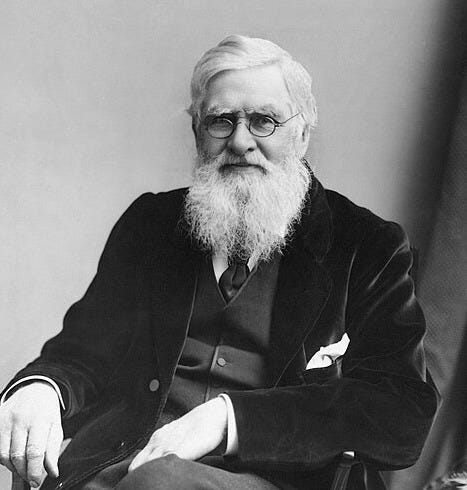
Alfred Russel Wallace
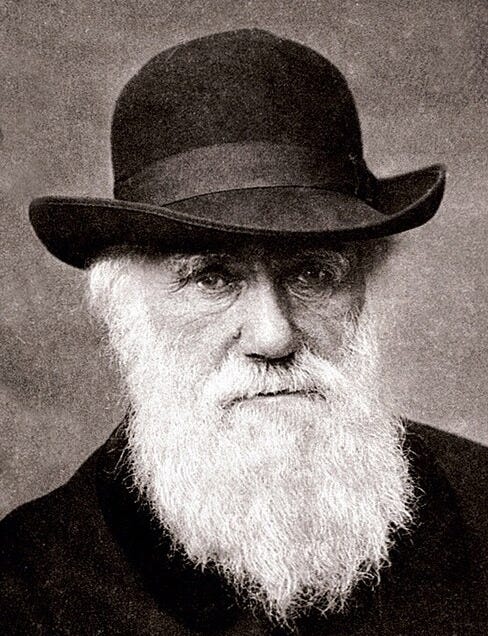
Charles Darwin
Wallace vs. Darwin.
Darwin articulated the original pro-evolution of mind position, he was an optimist and perhaps even a hyper-optimist. Towards the end of The Origin of Species, he says: “In the distant future I see open fields for far more important researches. Psychology will be based on a new foundation, that of the necessary acquirement of each mental power and capacity by gradation. Light will be thrown on the origin of man and his history” (1985, 458). Here I look at Darwin and Wallace’s disagreement over applying evolution to our minds. To be clear, Wallace is a nay-sayer, not about evolution in general but about the appeal to evolution in explaining the emergence of human minds.
In The Descent of Man, as well as in The Expression of the Emotions in Man and Animals, Darwin carefully developed his claim that we acquired “each mental power and capacity” by the gradual refinement of versions of such traits inherited from other animals. In The Descent of Man, Darwin tackled human evolution in general, which many of his contemporaries were set against, and the evolution of our mental powers, instincts and moral sense.[1]
Darwin made the case that many of our emotions and basic mental faculties were found in animals by appealing to evidence from studies of animal behavior. His next step was to argue that our mental capacities arose from their precursors in animals via descent and gradual modification in accordance with his account of natural selection.[2] Here’s Darwin: “If no organic being excepting man had possessed any mental power, or if his powers had been of a totally different nature from those of the lower animals, then we should never have been able to convince ourselves that our high faculties had been gradually been developed” (1998, 66). However, given the evidence he amassed, he was convinced that “there is no fundamental difference between man and the higher mammals in their mental faculties” (1998, 67). If we are to apply his ideas of descent and (gradual) modification to organic traits of humans, organs etc., then he reasoned we should apply these ideas to mental faculties as well. Darwin adopts the same approach to “higher” mental faculties, such as reasoning, arguing that there is abundant evidence of animals engaging in reasoning, we can assume that our capacity for reason is inherited and has been gradually modified by natural selection. He also sets out an evolutionary account of our “moral sense,” language and even belief in god(s). Darwin maintained that the principles of evolution by natural selection could and should be applied to account for the acquisition of our minds just as it is to our eyes, our hands and all our other “organic” traits.
Wallace, who co-discovered the theory of evolution by natural selection (See Darwin and Wallace 1858), was very supportive of Darwin’s application of his approach to human traits until shortly before the publication of The Descent of Man. Wallace then changed course and argued against the application of evolution to explain human mental characteristics. Here is Wallace on the limitations of the “law” of natural selection:
“In the brain of the lowest savage, and as far as we yet know, of the pre-historic races, we have an organ so little inferior in size and complexity to that of the highest types (such as the average European), that we must believe it capable, under a similar process of gradual development...of producing equal average results. But the mental requirements of the lowest savages, such as the Australians or the Andaman islanders, are very little above those of many animals…How, then, was an organ developed so far beyond the needs of its possessor? Natural selection could only have endowed the savage with a brain a little superior to that of an ape, whereas he actually possesses one but very little inferior to that of the average members of our learned societies” (1869).
Wallace’s answer to how such an organ was developed was “there seems to be a Power which has guided the action of those laws (of organic development) in definite directions and for special ends” (1869). He referred to this “Power” as a “Higher Intelligence.” So, Wallace believed that the gap between the human brain, which in his estimation was far bigger and more sophisticated than the brains of our ape ancestors, and the brains of apes could not have been bridged by natural selection. In later writings, consistent with his developing spiritualism, he added that attributes of our soul could not be produced from law governed behavior of matter. Wallace was equally skeptical that natural selection could provide an account of consciousness but also thought that there could be no evolutionary explanation of hairless skin, the vocal power of the larynx and the human hand.
This dispute over the evolution of mind is mostly a dispute over the appropriate application of natural selection. Darwin thought that human mental capacities should be accounted for by natural selection and Wallace disagreed. Wallace also added a dualist understanding of mind and a direct role for a higher power in the production of human mental capacities.
[1] Robert Richards (1987) presents a detailed history of 19th and early 20th century approaches to the evolution of mind and details the wide range of arguments against such view expressed at the time.
[2] Darwin also invoked sexual selection and other evolutionary considerations in his account of the origin of human mental capacities but a focus on natural selection will do for our purposes here.
(Look for upcoming posts on philosophers against the evolution of mind and evolutionary biologists argue over the evolution of mind.)